
Banking
Checking Account vs Savings Account Explained
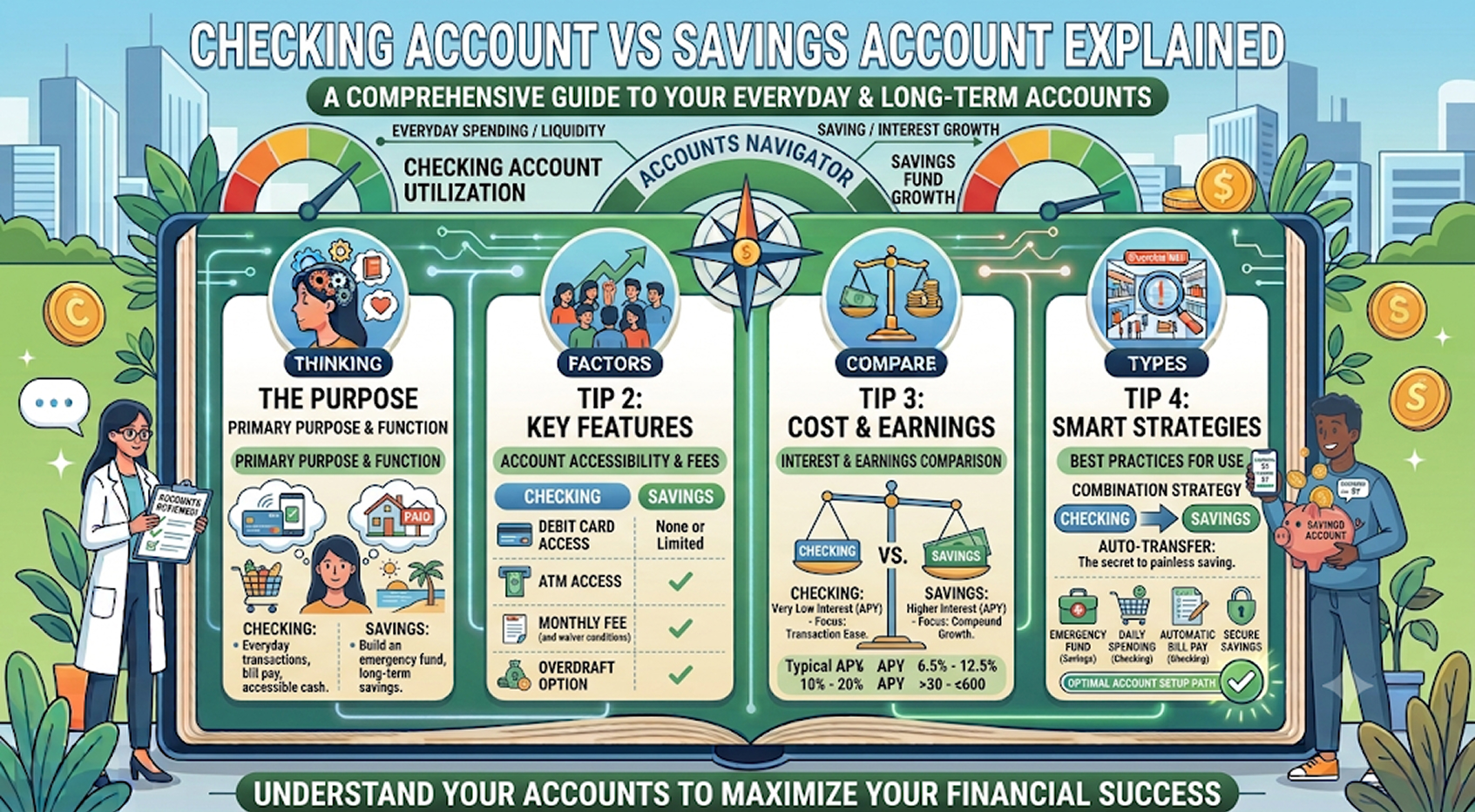
Checking and savings accounts are two of the most common types of bank accounts, but they serve different purposes. Understanding how each account works can help you manage your money more effectively and choose the right account for your financial needs.
Many people use both accounts together—keeping everyday spending money in a checking account while saving extra funds in a savings account for future goals or emergencies.
What Is a Checking Account?
A checking account is designed for everyday financial transactions. It allows you to deposit money, withdraw cash, pay bills, make purchases with a debit card, write checks, and transfer funds easily.
What Is a Savings Account?
A savings account is intended for storing money that you don't plan to spend immediately. It usually earns interest, helping your savings grow gradually while keeping your funds safe.
Key Differences
- Checking accounts are for daily spending, while savings accounts are for saving money.
- Savings accounts typically earn interest, whereas checking accounts often earn little or no interest.
- Checking accounts generally allow unlimited everyday transactions.
- Savings accounts may limit certain withdrawals or transfers depending on bank policies.
- Checking accounts usually include debit cards and check-writing features.
When Should You Use a Checking Account?
Use a checking account for receiving your salary, paying bills, shopping, withdrawing cash, and managing your regular monthly expenses.
When Should You Use a Savings Account?
A savings account is best for emergency funds, future purchases, vacations, education expenses, or any financial goal where you want your money to grow while remaining easily accessible.
Benefits of Using Both Accounts
- Separate spending money from savings.
- Reduce the temptation to spend savings.
- Earn interest on saved money.
- Manage monthly expenses more effectively.
- Build an emergency fund while maintaining everyday cash flow.
- Improve overall financial organization.
Choosing the Right Account
The best choice depends on your financial goals. If you need an account for daily transactions, a checking account is appropriate. If your goal is to save money and earn interest, a savings account is the better option. Many people benefit from having both.
FAQs
Can I have both a checking account and a savings account?
Yes. Many people use a checking account for daily expenses and a savings account for long-term savings and emergency funds.
Which account earns interest?
Savings accounts typically earn interest, while many checking accounts earn little or no interest.
Which account is better for paying bills?
A checking account is generally the better choice because it is designed for frequent transactions and bill payments.
Should I keep all my money in a checking account?
It's generally better to keep only the money you need for everyday expenses in your checking account and place additional funds in a savings account to earn interest.