
Personal Finance
Common Money Mistakes and How to Avoid Them
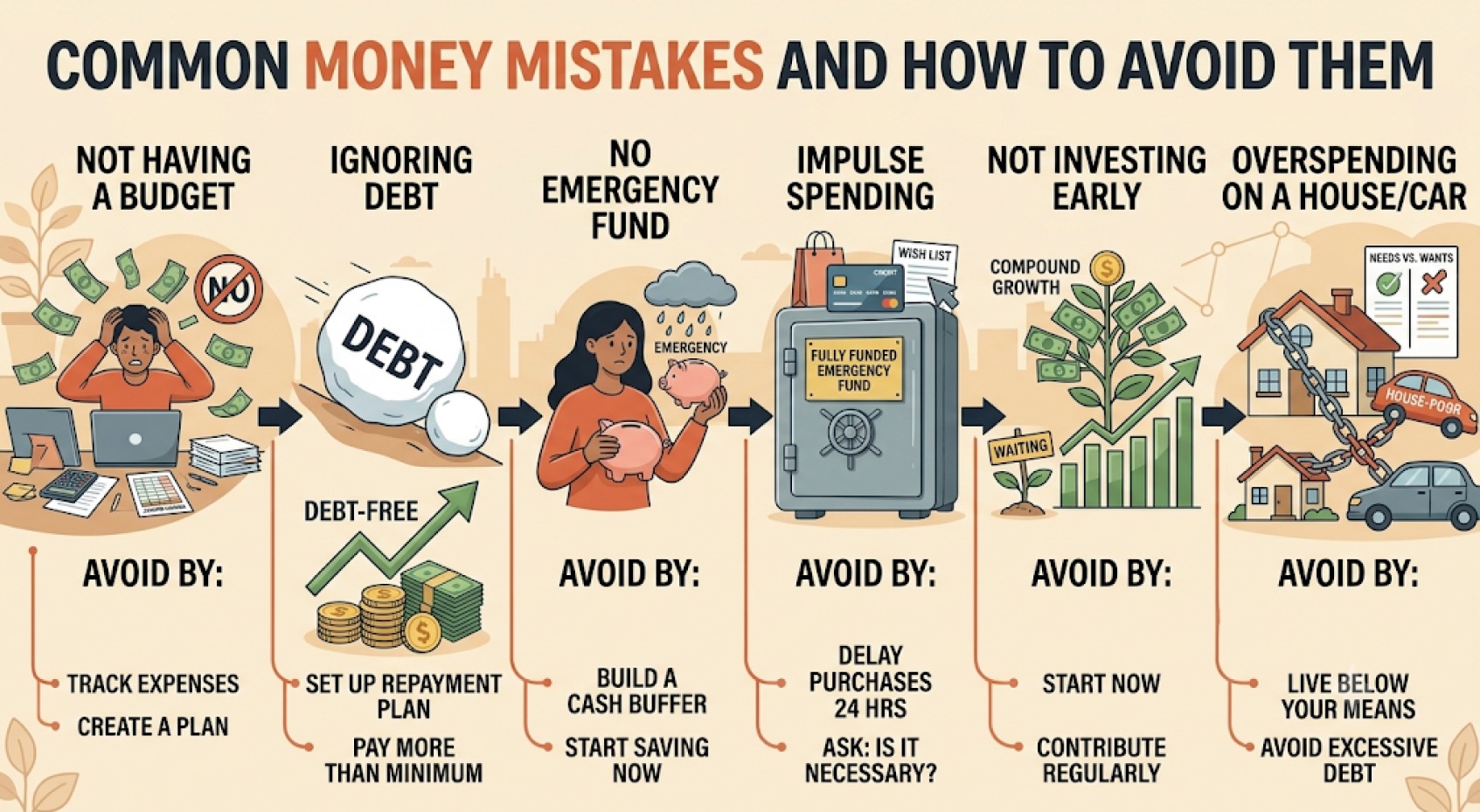
Managing money isn't just about earning more—it's also about making smart financial decisions. Many people struggle with money not because they have a low income, but because they develop habits that lead to unnecessary expenses, debt, or missed savings opportunities. The good news is that most financial mistakes can be corrected with awareness and consistency.
Understanding common money mistakes can help you make better financial decisions, build healthy habits, and improve your long-term financial well-being.
Living Without a Budget
One of the biggest financial mistakes is spending money without a plan. A budget helps you understand your income, control expenses, and prioritize important financial goals. Without one, it's easy to overspend and lose track of where your money goes.
Ignoring Small Expenses
Daily purchases like coffee, snacks, online subscriptions, and food delivery may seem inexpensive, but together they can consume a significant portion of your monthly income. Tracking these expenses helps identify areas where you can save.
Not Saving for Emergencies
Unexpected expenses such as medical bills, vehicle repairs, or job loss can create financial stress. Building an emergency fund, even gradually, provides a safety net and reduces the need to rely on loans or credit cards.
Using Credit Cards Carelessly
Credit cards can be useful financial tools when used responsibly. However, carrying high balances or making only minimum payments often leads to expensive interest charges. Try to pay your balance in full whenever possible.
Buying on Impulse
Impulse purchases are often driven by emotions rather than actual needs. Before buying something that isn't essential, wait 24 hours. This simple habit can help you make more thoughtful spending decisions.
Delaying Saving and Investing
Many people postpone saving because they think they'll start when they earn more. In reality, developing the habit of saving regularly—even with small amounts—is more important than waiting for the perfect time.
Ignoring Financial Goals
Without clear financial goals, it's difficult to stay motivated. Setting short-term and long-term goals gives your money a purpose and helps guide your spending and saving decisions.
Failing to Review Monthly Expenses
Your financial situation can change over time. Reviewing your expenses each month helps you identify unnecessary costs, adjust your budget, and stay aligned with your financial goals.
Comparing Your Lifestyle to Others
Trying to keep up with friends, coworkers, or social media trends often leads to unnecessary spending. Focus on your own financial goals instead of comparing your lifestyle with others.
Not Learning About Personal Finance
Financial knowledge is one of the most valuable investments you can make. Reading books, following trusted financial resources, and learning basic money management skills can help you avoid costly mistakes.
How to Avoid These Money Mistakes
- Create and follow a realistic monthly budget.
- Track all of your income and expenses.
- Build an emergency fund gradually.
- Use credit cards responsibly and pay balances on time.
- Avoid impulse purchases by waiting before buying.
- Set clear financial goals.
- Review your budget every month.
- Continue improving your financial knowledge.
Why Good Financial Habits Matter
Good money habits don't develop overnight, but every smart financial decision brings you closer to financial stability. Avoiding common mistakes allows you to save more, reduce stress, prepare for emergencies, and achieve your long-term goals with greater confidence.
FAQs
What is the most common money mistake?
One of the most common mistakes is spending without following a budget, which often leads to overspending and difficulty saving.
How can I stop impulse spending?
Try using the 24-hour rule before making non-essential purchases and always shop with a list or spending plan.
How much should I save for emergencies?
Many financial experts recommend saving enough to cover several months of essential living expenses, but starting with smaller savings goals is perfectly fine.
Is it too late to improve my financial habits?
No. It's never too late to start budgeting, saving, reducing debt, and making smarter financial decisions.