
Credit
Credit Card Dos and Don'ts for Beginners
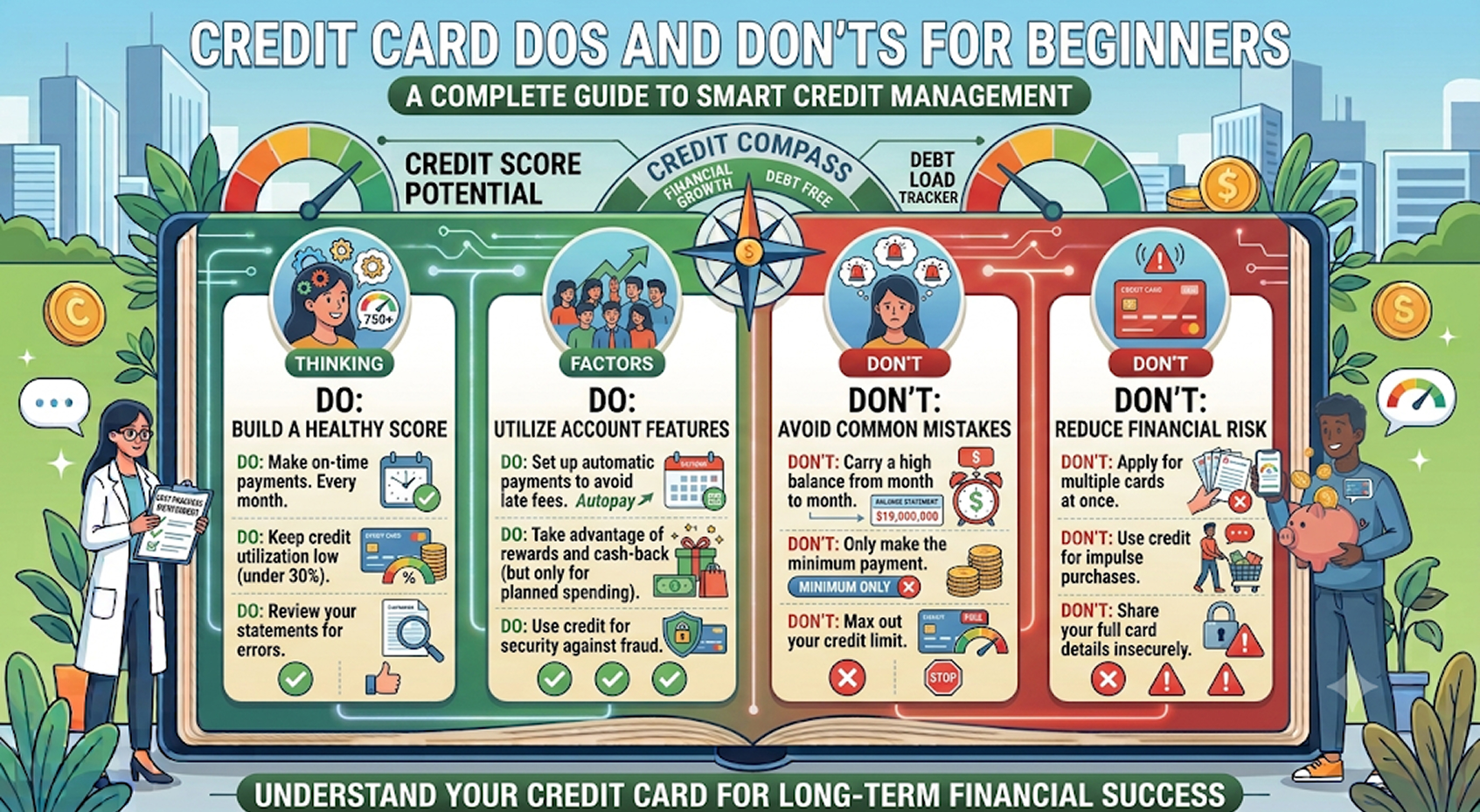
A credit card can be a valuable financial tool when used responsibly. It offers convenience, helps build your credit history, and may provide rewards or cashback. However, poor credit card habits can quickly lead to debt and financial stress.
If you're using your first credit card, understanding the basic dos and don'ts can help you avoid common mistakes and maintain a healthy credit profile.
Do Pay Your Bill on Time
Always pay your credit card bill by the due date. On-time payments help build a positive credit history, avoid late fees, and reduce interest charges.
Do Keep Your Balance Low
Try to use only a small portion of your available credit limit. Keeping your credit utilization low can positively impact your credit score.
Do Review Your Statements
Check your monthly credit card statements for unauthorized transactions, billing errors, or unexpected charges. Reporting issues early helps protect your account.
Don't Spend More Than You Can Repay
Use your credit card only for purchases you can afford to pay off. Carrying large balances may result in high interest charges and long-term debt.
Don't Miss Minimum Payments
Missing even the minimum payment can lead to late fees, higher interest costs, and negative effects on your credit history.
Don't Apply for Too Many Credit Cards
Applying for multiple credit cards within a short period may affect your credit profile and make it harder to manage your finances effectively.
Credit Card Best Practices
- Pay your balance on time every month.
- Keep your credit utilization low.
- Track your spending regularly.
- Review your monthly statements.
- Use your credit card for planned purchases.
- Avoid unnecessary cash advances.
- Protect your card information from fraud.
- Understand your card's fees and interest rates.
Benefits of Responsible Credit Card Use
Responsible credit card use helps build a strong credit history, improves your credit score, provides payment convenience, offers potential rewards, and prepares you for future financial opportunities such as loans and mortgages.
FAQs
Should I pay my credit card bill in full every month?
Yes. Paying the full balance helps you avoid interest charges and maintain healthy financial habits.
What happens if I miss a credit card payment?
Missing a payment may result in late fees, interest charges, and possible negative effects on your credit history.
How much of my credit limit should I use?
Keeping your credit utilization low, generally below 30% of your available credit limit, is considered a good practice.
Is having multiple credit cards bad?
Not necessarily. However, beginners should avoid applying for several cards at once and only use credit they can manage responsibly.