Income & Side Hustles
Freelancing vs Part-Time Jobs: Which Pays Better?
Many people look for additional income to achieve financial goals, pay off debt, or build savings. Two popular options are freelancing and part-time jobs. While both can provide extra income, they differ in flexibility, earning potential, stability, and responsibilities.
The better option depends on your skills, available time, financial goals, and willingness to manage uncertainty. Understanding the advantages and disadvantages of each can help you choose the right path.
What Is Freelancing?
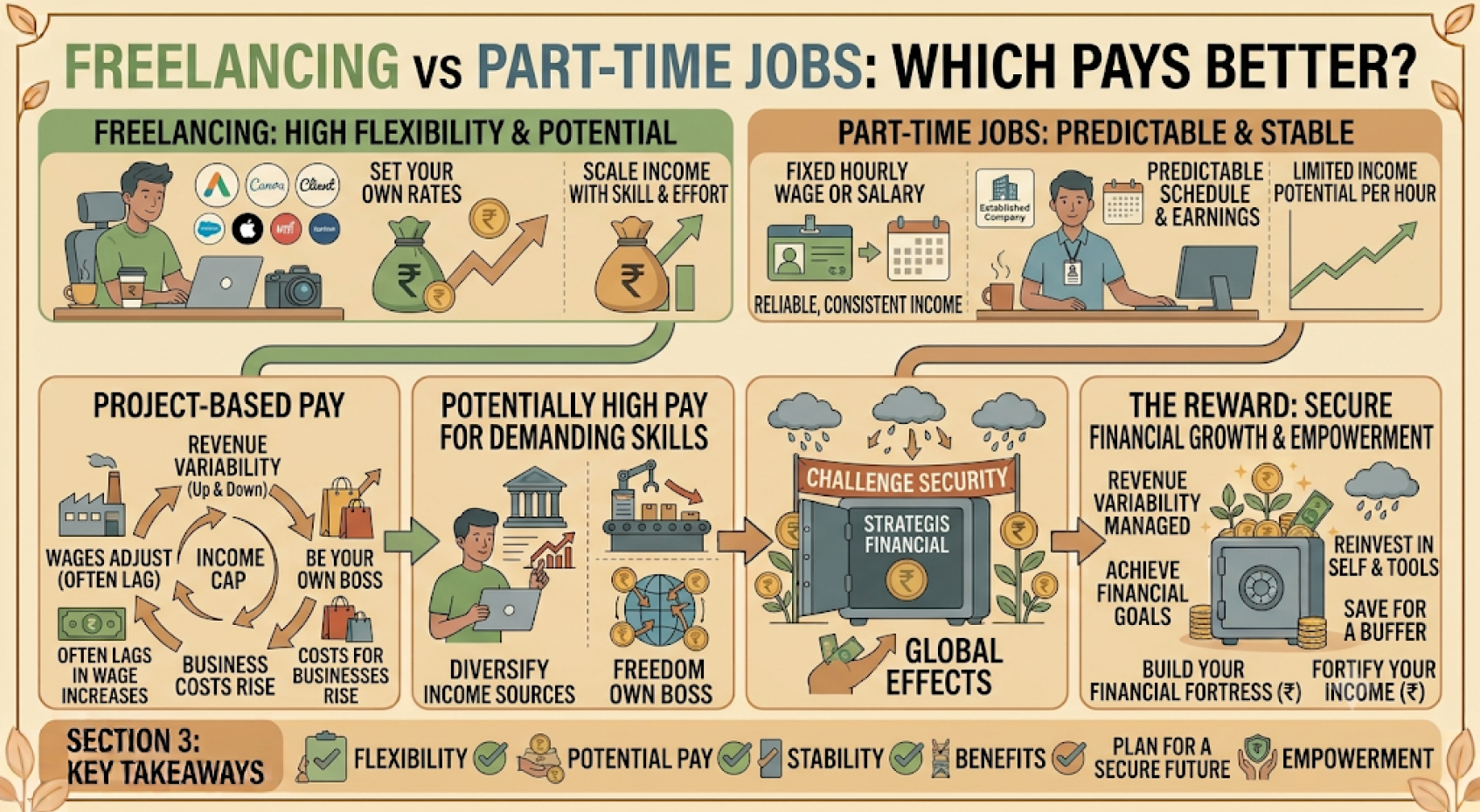
Freelancing means working independently by offering your skills or services to multiple clients. Common freelance work includes writing, graphic design, programming, digital marketing, video editing, photography, and consulting. Freelancers usually set their own rates and schedules.
What Is a Part-Time Job?
A part-time job involves working a fixed number of hours for an employer. Examples include retail, customer service, tutoring, delivery services, hospitality, and office support. Part-time employees generally receive a regular paycheck based on agreed working hours.
Earning Potential
Freelancing often has higher earning potential because experienced freelancers can increase their rates and work with multiple clients. However, income may vary from month to month. Part-time jobs usually provide more predictable earnings but often have fixed hourly wages and limited opportunities for rapid income growth.
Flexibility
Freelancing offers greater flexibility, allowing you to choose your projects, clients, and working hours. Part-time jobs typically require following a set schedule determined by your employer.
Job Security
Part-time jobs generally provide more consistent income and predictable work schedules. Freelancers may experience periods with fewer clients and must actively search for new projects.
Skills Required
Freelancing usually requires specialized skills, self-marketing, communication, and time management. Part-time jobs often provide training and may have fewer entry requirements depending on the role.
Pros of Freelancing
- Higher earning potential.
- Flexible working hours.
- Choose your own clients and projects.
- Opportunity to build a personal brand.
- Work from almost anywhere.
Pros of Part-Time Jobs
- Steady and predictable income.
- Less responsibility for finding work.
- Structured work schedule.
- Suitable for beginners with limited experience.
- May include employee benefits depending on the employer.
Which Pays Better?
In the short term, a part-time job often provides more reliable income. Over the long term, freelancing may offer significantly higher earning potential if you develop valuable skills, build a strong reputation, and maintain a steady client base. The best option depends on your goals, experience, and willingness to accept financial uncertainty.
How to Choose the Right Option
- Consider your current skills.
- Decide how much flexibility you need.
- Evaluate your financial stability.
- Think about your long-term career goals.
- Start part-time while building freelance experience if possible.
FAQs
Can I do both freelancing and a part-time job?
Yes. Many people combine a part-time job with freelancing to enjoy stable income while building additional earnings.
Which option is better for students?
Both can work well. Part-time jobs provide consistent income, while freelancing offers flexibility if you have marketable skills.
Does freelancing always pay more?
Not always. Income depends on your experience, skills, client demand, and ability to find regular work.
Which option is less risky?
Part-time jobs are generally less risky because they usually provide a predictable paycheck and regular work schedule.