Debt Management
How to Pay Off Debt Faster Without Stress
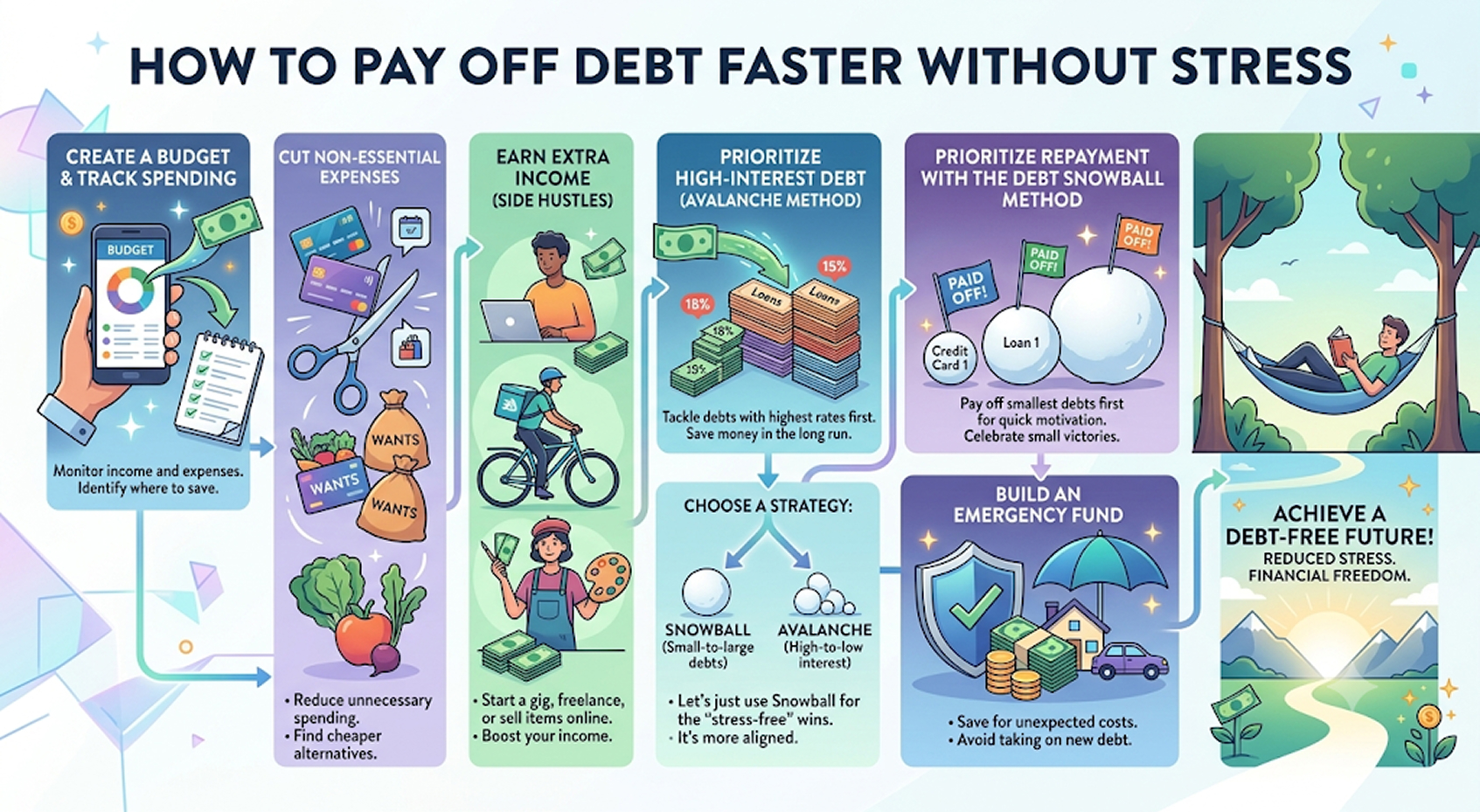
Paying off debt can feel overwhelming, but with the right strategy and consistent effort, you can become debt-free without unnecessary stress. The key is to create a realistic repayment plan that fits your income and lifestyle.
Instead of trying to pay everything off at once, focus on making steady progress. Small improvements in your spending and saving habits can significantly speed up your debt repayment journey.
Know Exactly What You Owe
Start by listing all your debts, including the total balance, interest rate, minimum monthly payment, and due date. Having a clear overview makes it easier to prioritize repayments.
Create a Realistic Budget
Build a monthly budget that covers your essential expenses while setting aside extra money for debt payments. Reducing unnecessary spending can free up additional funds for faster repayment.
Choose a Repayment Strategy
Two popular repayment methods are the debt snowball method, where you pay off the smallest balances first, and the debt avalanche method, where you focus on debts with the highest interest rates. Choose the approach that keeps you motivated.
Pay More Than the Minimum
Whenever possible, pay more than the minimum monthly payment. Even small additional payments can reduce the total interest you pay and shorten the repayment period.
Avoid Taking on New Debt
While paying off existing debt, avoid making unnecessary purchases on credit. Limiting new debt allows you to focus your resources on reducing your current balances.
Celebrate Small Milestones
Paying off debt takes time, so celebrate each milestone along the way. Recognizing your progress can help you stay motivated and committed to your financial goals.
Tips to Pay Off Debt Faster
- List all your debts and prioritize them.
- Follow a realistic monthly budget.
- Pay more than the minimum whenever possible.
- Reduce unnecessary expenses.
- Use extra income to make additional payments.
- Avoid accumulating new debt.
- Track your repayment progress regularly.
- Stay patient and consistent.
Benefits of Becoming Debt-Free
Paying off debt improves your financial stability, reduces stress, increases your savings potential, strengthens your credit profile, and gives you greater freedom to achieve future financial goals.
FAQs
Should I pay off the smallest debt or the highest-interest debt first?
Both methods can be effective. The debt snowball method builds motivation by eliminating smaller debts first, while the debt avalanche method can reduce total interest costs.
Can I pay off debt with a tight budget?
Yes. Even small extra payments and consistent budgeting can help reduce debt over time.
Should I stop saving while paying off debt?
It's generally wise to maintain a small emergency fund while focusing on debt repayment to avoid relying on credit for unexpected expenses.
How can I stay motivated during debt repayment?
Track your progress, celebrate milestones, and remember your long-term financial goals to stay focused throughout your repayment journey.