
Investing
Investing for Beginners: A Simple Guide
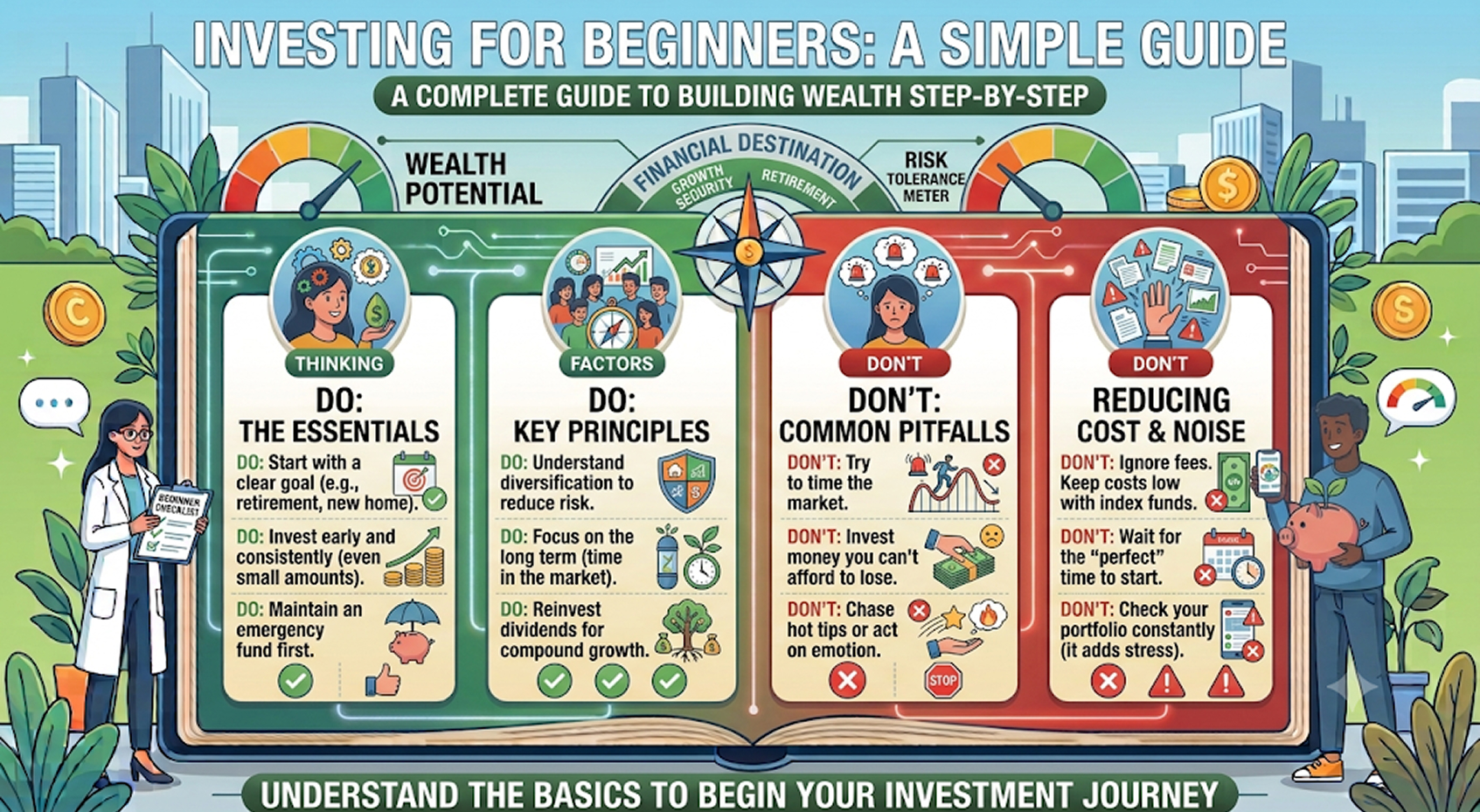
Investing is one of the most effective ways to grow your money over time. Instead of letting your savings sit idle, investing allows your money to potentially earn returns that can help you achieve long-term financial goals such as buying a home, funding education, or planning for retirement.
For beginners, investing may seem complicated, but understanding a few basic concepts can make the process much easier. Starting early and investing consistently often matters more than investing large amounts.
What Is Investing?
Investing means putting your money into assets such as stocks, bonds, mutual funds, or exchange-traded funds (ETFs) with the goal of earning returns over time. Unlike saving, investing involves some level of risk, but it also offers greater potential for long-term growth.
Why Should You Invest?
Investing helps your money grow faster than traditional savings in many cases. It can also help protect your purchasing power against inflation and support major financial goals.
Common Investment Options
- Stocks
- Bonds
- Mutual Funds
- Exchange-Traded Funds (ETFs)
- Index Funds
- Certificates of Deposit (CDs)
Tips for Beginner Investors
- Start investing as early as possible.
- Invest regularly, even with small amounts.
- Diversify your investments.
- Understand your risk tolerance.
- Focus on long-term goals.
- Avoid emotional investment decisions.
- Review your portfolio periodically.
- Continue learning about investing.
Common Mistakes to Avoid
Many beginners try to time the market, invest without research, or panic during market declines. A disciplined, long-term approach usually produces better results than reacting to short-term market movements.
Benefits of Investing
Investing can help build wealth, generate passive income, prepare for retirement, achieve financial goals, and protect your money from the effects of inflation over the long term.
FAQs
Can I start investing with a small amount of money?
Yes. Many investment platforms allow beginners to start investing with relatively small amounts.
Is investing risky?
All investments involve some level of risk, but diversification and long-term investing can help manage that risk.
What is the best investment for beginners?
Many beginners choose diversified investments such as index funds, mutual funds, or ETFs because they spread risk across multiple assets.
How often should I invest?
Investing consistently, such as monthly, is a common strategy that helps build wealth over time.