
Personal Finance
Money Management Tips for Beginners
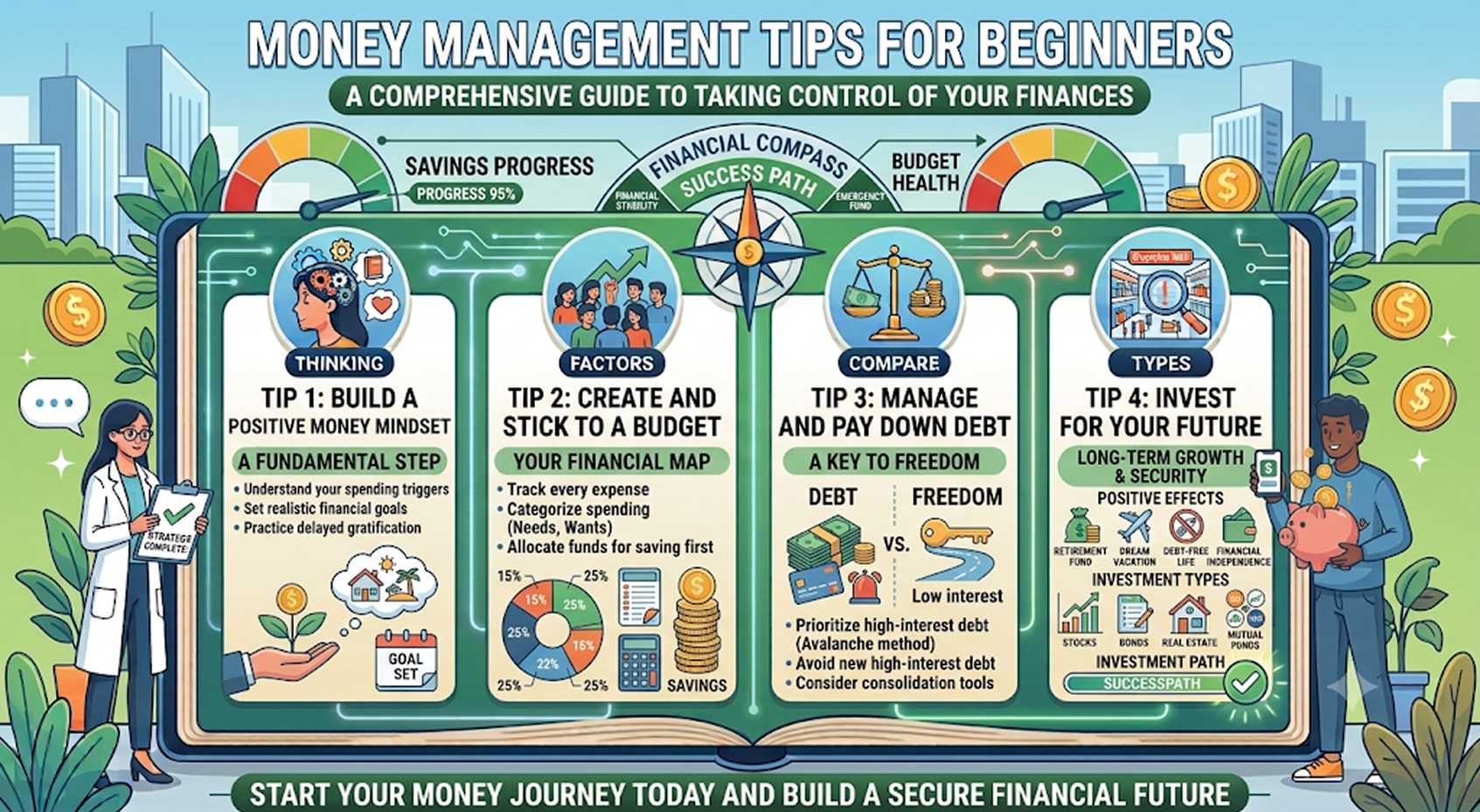
Managing your money effectively is one of the most valuable life skills you can develop. Good money management helps you pay your bills on time, save for future goals, reduce financial stress, and avoid unnecessary debt.
If you're just starting your financial journey, you don't need complex strategies. Building a few simple habits and staying consistent can make a significant difference over time.
Create a Monthly Budget
A budget allows you to plan how you'll spend and save your income each month. List your income, fixed expenses, variable expenses, and savings goals to ensure your money has a purpose.
Track Every Expense
Recording your daily expenses helps you understand where your money goes. Even small purchases can add up over time, so tracking your spending makes it easier to identify areas where you can save.
Build an Emergency Fund
Unexpected expenses can happen at any time. Setting aside money for emergencies helps you handle financial surprises without relying on credit cards or loans.
Avoid Unnecessary Debt
Borrow only when necessary and make loan or credit card payments on time. Avoid using debt to pay for non-essential purchases whenever possible.
Set Financial Goals
Whether you're saving for a vacation, a new car, or retirement, having clear financial goals gives you motivation and helps you make better spending decisions.
Review Your Finances Regularly
Review your budget, savings, and expenses at least once a month. Regular reviews help you stay on track and make adjustments when your financial situation changes.
Essential Money Management Tips
- Create and follow a monthly budget.
- Track all income and expenses.
- Save money before spending on wants.
- Build an emergency fund.
- Pay bills on time.
- Avoid unnecessary debt.
- Set realistic financial goals.
- Review your finances every month.
Benefits of Good Money Management
Effective money management helps you reduce financial stress, improve your savings, make informed financial decisions, avoid debt problems, and build long-term financial security.
FAQs
What is money management?
Money management is the process of planning, budgeting, saving, spending, and managing your finances responsibly.
Why is budgeting important?
Budgeting helps you control your spending, prioritize savings, and ensure your income covers your financial responsibilities.
How much should beginners save each month?
Save an amount that fits your budget, even if it's small. Consistency is more important than the amount you save.
How often should I review my finances?
Review your finances at least once a month to monitor your progress and adjust your budget as needed.