
Investing
Stocks vs Bonds: What's the Difference?
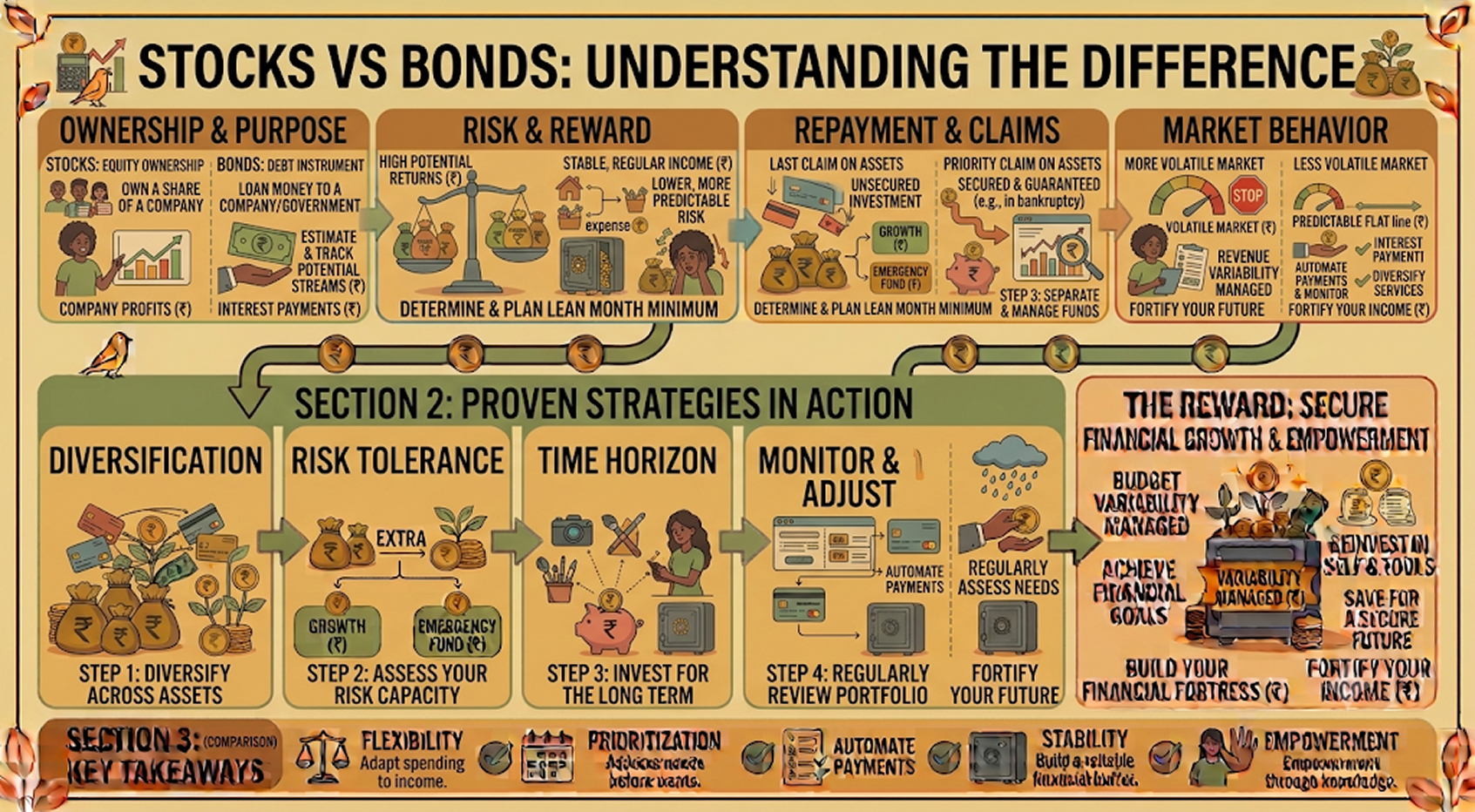
Stocks and bonds are two of the most common investment options available. While both can help you grow your wealth, they work differently and come with different levels of risk and potential return. Understanding these differences is essential before making investment decisions.
Many investors include both stocks and bonds in their portfolios because they can complement each other and help balance risk and return.
What Are Stocks?
Stocks represent ownership in a company. When you buy a stock, you become a shareholder and may benefit if the company's value increases. Some companies also pay dividends, allowing shareholders to receive a portion of the company's profits.
What Are Bonds?
Bonds are loans made by investors to governments or companies. In return, the bond issuer agrees to pay regular interest and repay the original investment when the bond reaches maturity.
Key Differences
- Stocks represent ownership, while bonds represent a loan.
- Stocks generally offer higher growth potential but greater risk.
- Bonds usually provide fixed interest payments with lower risk.
- Stock prices can fluctuate significantly based on market conditions.
- Bond values tend to be more stable but may offer lower long-term returns.
Advantages of Stocks
- Potential for higher long-term returns.
- Opportunity to receive dividends.
- Ownership in successful companies.
- Potential protection against inflation over time.
Advantages of Bonds
- Regular interest income.
- Generally lower investment risk.
- More predictable returns.
- Can help reduce overall portfolio volatility.
Which Investment Is Right for You?
The right investment depends on your financial goals, investment timeline, and tolerance for risk. Younger investors with long-term goals may choose to invest more heavily in stocks, while investors seeking stable income or lower risk may prefer bonds. Many investors combine both to create a diversified portfolio.
Tips Before Investing
- Define your financial goals.
- Understand your risk tolerance.
- Diversify your investments.
- Invest for the long term whenever possible.
- Review your portfolio regularly.
- Avoid emotional investment decisions.
- Continue learning about different investment options.
FAQs
Which is riskier, stocks or bonds?
Stocks generally carry higher risk because their prices fluctuate more, while bonds are typically considered lower-risk investments.
Can I invest in both stocks and bonds?
Yes. Many investors combine stocks and bonds to balance growth potential with stability and reduce overall investment risk.
Do bonds always pay interest?
Most traditional bonds pay regular interest, but payment structures vary depending on the type of bond.
Are stocks better than bonds?
Neither is universally better. Stocks may offer higher returns but greater risk, while bonds typically provide more stable income with lower risk.