
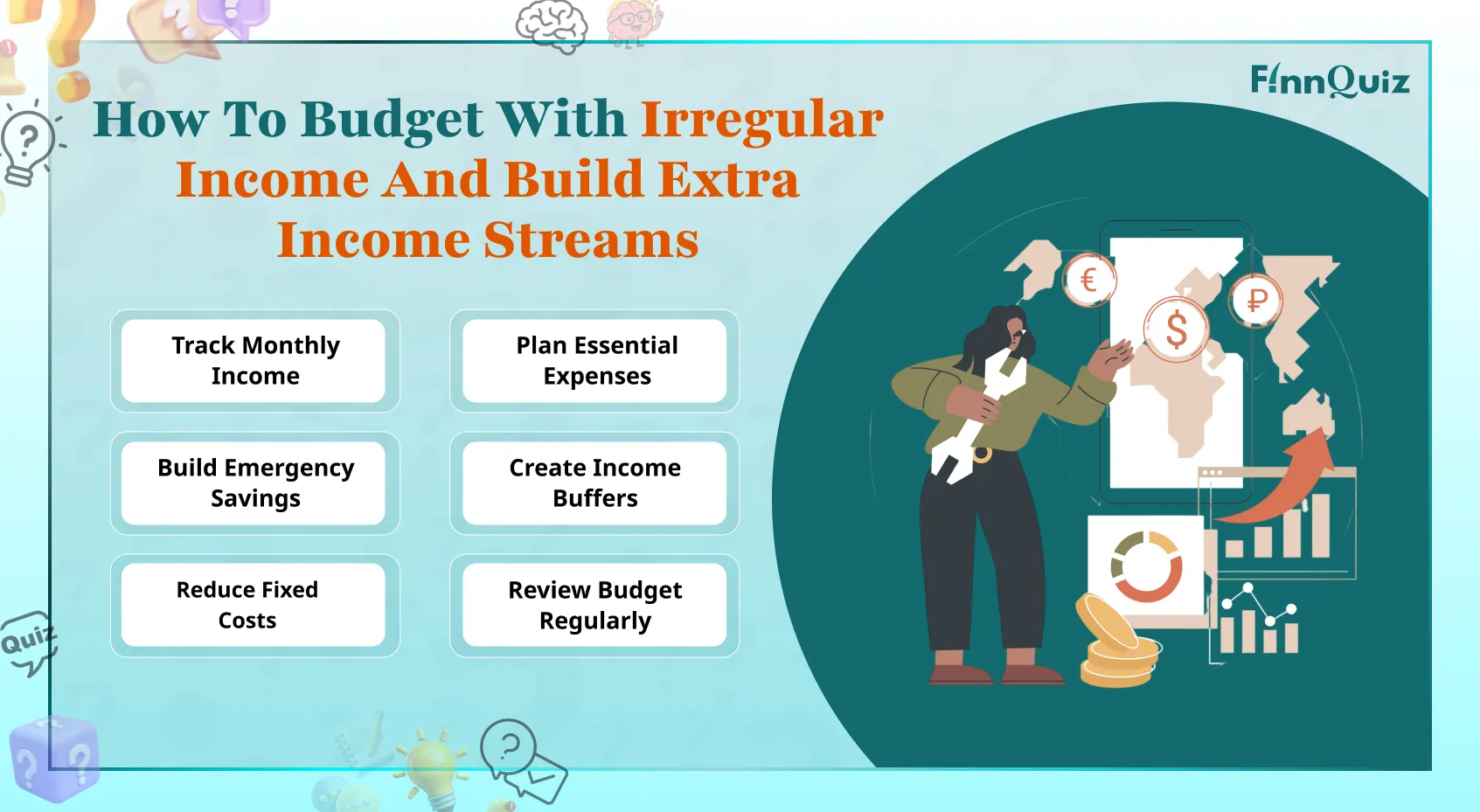
If your paycheck varies from month to month—because you freelance, drive for a gig app, work on commission, or have a seasonal job—traditional budgeting advice often fails you. The usual rule of 'plan next month with this month's income' assumes stability that you do not have. This guide gives you a different system: one that starts with your lowest possible income, builds a buffer to smooth out the lows, and shows you how to use surplus months to create additional income streams. You will learn to stop stressing about lean months and start building a financial foundation that works with fluctuation, not against it.
What Makes Irregular Income Different
Irregular income is any earnings that fluctuate month to month—common for freelancers, independent contractors, gig workers, small-business owners, and commission-based salespeople. The core challenge is not the variation itself but the uncertainty: you cannot predict exactly what you will earn, so you cannot plan fixed expenses with confidence. Traditional budgets that assume a fixed monthly amount fall apart because they force you to guess, and guessing leads to overspending in lean months or under-saving in fat months. The solution is to plan for the worst and use the best to build a cushion.
The Four-Step Framework for Irregular Income
These four steps give you a system that works whether you earn $2,000 or $6,000 in a given month.
- Step 1: Calculate your baseline expenses – the absolute minimum you need to cover essentials like housing, food, utilities, insurance, and minimum debt payments. This is your financial floor.
- Step 2: Build a buffer fund – save enough to cover three to six months of your baseline expenses. This is your shock absorber for low-income months.
- Step 3: Budget based on your lowest expected income – not your average. Use your lowest month from the past year as your planning number. Any income above that is surplus.
- Step 4: Assign surplus deliberately – replenish the operating buffer, reserve the tax amount indicated by your own estimate, then allocate money among debt, savings, and discretionary spending according to current priorities.
Calculating Your Baseline Expenses
Your baseline is the amount you must earn each month just to stay afloat. Review your bank statements from the last six months and list only essential, recurring costs: rent or mortgage, utilities, groceries, basic transportation, insurance premiums, and minimum debt payments. Exclude dining out, subscriptions, entertainment, and non-essential shopping. If you are unsure, ask: 'Would I be severely affected if I could not pay this?' Add a small 5% buffer for minor unexpected costs. This number is your anchor—knowing it reduces anxiety because you know exactly what you need to survive.
Building Your Buffer Fund
Your buffer fund is the single most important tool for irregular income. It covers your baseline expenses during months when your income falls short. Start with a goal of three months of baseline expenses; once you reach that, work toward six. Build it gradually by sending a large portion of surplus income from good months directly into a separate savings account. Treat this fund as non-negotiable—it is the price of financial peace. Once your buffer is fully funded, you will no longer panic in a slow month; you simply draw from the buffer and replenish it when business picks up.
Budgeting on Your Lowest Income
Look at your earnings over the past 12 months and identify the lowest month. Use that number as your monthly budget limit for essentials. If you are new to irregular work, estimate conservatively—20–30% below your average. This ensures that even in your worst month, you can cover your baseline. Any income above that amount is surplus. This approach may feel tight in good months, but it prevents overspending when you cannot afford it. When you have a surplus, you allocate it purposefully rather than letting it disappear on impulse.
Create Your Own Surplus-Month Percentages
When you earn more than your baseline, follow this simple allocation: put 50% of the surplus toward your buffer fund until it reaches your target. Once the buffer is full, redirect that 50% to long-term savings or investments. Put 25% toward debt repayment—credit cards, student loans, or other high-interest obligations. The remaining 25% is for you: guilt-free spending on things you enjoy. This structured approach ensures that good months build your financial security rather than just funding lifestyle creep.
Handling Taxes as an Irregular Earner
Self-employed workers generally calculate tax from net profit, not gross customer payments. Self-employment tax, federal income tax, state tax, deductions, credits, other household income, and safe-harbor rules can produce very different reserve needs. A separate tax account can help, but 25% or 30% is only an example—not a reliable estimate for every worker. Use the current Form 1040-ES instructions or qualified tax assistance to calculate an amount and determine whether estimated payments are required.
Turning Irregular Income into Multiple Streams
One of the best ways to stabilize irregular income is to create additional streams that smooth out the peaks and valleys. While you are freelancing or gig-working, consider adding a part-time job with set hours for a predictable base, or start a passive-income project like selling digital products, affiliate marketing, or renting out assets. The goal is to have at least one income source that is consistent (even if small) alongside your variable work. Over time, you can build a portfolio of streams—active (your main freelance work), semi-passive (courses or templates), and truly passive (dividends or royalties). This diversification reduces the impact of any single client or project drying up.
| Income Type | Examples | Effort Level | Stability |
|---|---|---|---|
| Active (time-for-money) | Freelancing, gig work, part-time job | High ongoing effort | Low to medium |
| Semi-passive (upfront work, then maintenance) | Digital products, online courses, affiliate marketing | High upfront, low ongoing | Medium |
| Passive (money works for you) | Dividend stocks, REITs, rental property | Low after setup | Variable |
Worked Example: Smoothing Four Uneven Months
Worked four-month illustration: a freelancer has $3,000 of baseline monthly expenses and receipts ranging from $2,800 to $5,500. The budget starts with the $3,000 baseline and uses an operating buffer to cover timing gaps. In a $5,500 month, the $2,500 above baseline is divided among the calculated tax reserve, replenishing the buffer, debt, and discretionary spending. The percentages are chosen only after those amounts are known; the example does not promise that freelancing, investing, or a digital product will produce a particular income or eliminate financial stress.
Common Mistakes and Their Consequences
- Budgeting on average income: Leads to overspending in lean months and panic.
- Not building a buffer: Forces you to rely on credit cards during slow periods, creating debt.
- Neglecting to set aside taxes: Results in a huge tax bill and possible penalties.
- Spending all surplus immediately: Misses the chance to build security and wealth.
- Relying on one client or gig: If they leave, your income drops to zero. Diversify your client base and income streams.
- Undercharging for freelance work: Low rates make it harder to cover taxes and expenses. Research market rates and raise yours gradually.
Exceptions and Situations Where This May Not Apply
If your irregular income is seasonal—for example, you earn most of your money in three months—you need a different approach. You may need to save aggressively during peak season to cover the entire year. In that case, calculate your annual income and divide by 12 to get a monthly average, but build a larger buffer to cover the off-season. Also, if you have a spouse with a stable income, you can budget jointly and treat your irregular earnings as variable extra. The principles of buffer and baseline still apply, but your risk is lower.
Practical Checklist
- Have you calculated your baseline monthly expenses (essentials only)?
- Do you have a buffer fund of at least three months of baseline expenses?
- Are you budgeting based on your lowest expected income, not your average?
- Do you have a system to allocate surplus—buffer, debt, savings, and fun?
- Have you estimated federal and state obligations from net profit and reserved the calculated amount?
- Have you identified at least one additional income stream to reduce reliance on a single source?
- Do you track your income and expenses weekly to catch issues early?
Calculate a Baseline and One-Month Buffer
This week: calculate your baseline expenses and open a separate savings account for your buffer and for taxes. Over the next month: track every payment you receive and deposit 30% into your tax account. Identify one side hustle you can start with minimal effort—perhaps a freelance service you already offer, or selling unused items. By the end of three months: aim to have at least one month of baseline expenses in your buffer, and have made your first estimated tax payment. After six months: you should have a fully funded buffer, a clear budget based on your lowest income, and at least two income streams. This is a marathon, not a sprint—consistency wins.