
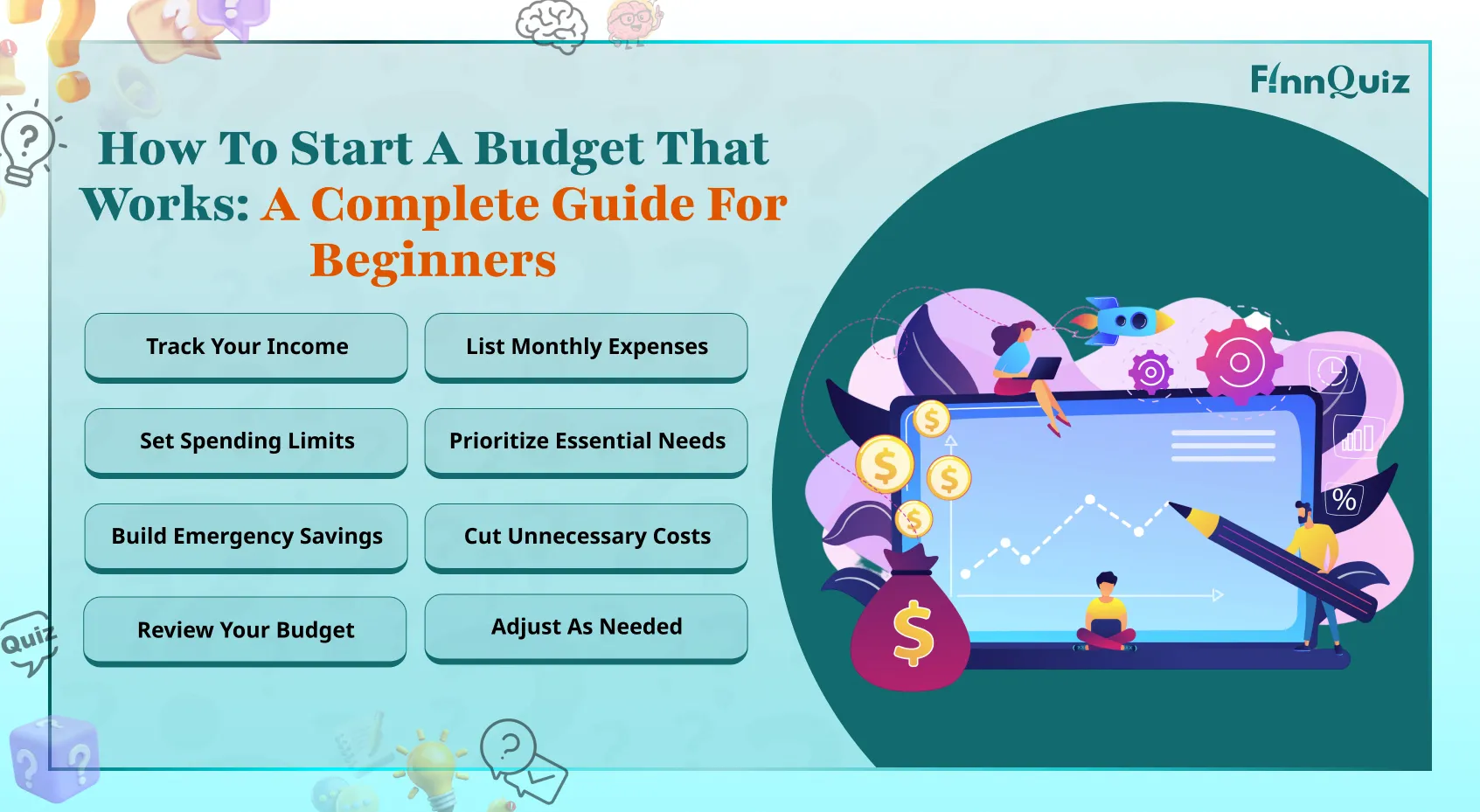
A budget is not a cage. It is a plan that tells your money where to go instead of wondering where it went. For a complete beginner, the idea of budgeting often feels overwhelming—like a strict diet that requires constant willpower and leaves no room for fun. That is a recipe for failure. The reality is simpler: a budget that works is one that fits your real life, not one that forces you to live someone else's ideal. This guide walks you through exactly how to build that kind of budget from scratch, with clear steps, realistic examples, and a fictional case study you can follow along with.
What Is a Budget, Really?
A budget is a written plan for your monthly income and expenses. It is a proactive decision about where your money will go before you spend it. Many people think a budget is about restriction—saying 'no' to everything you enjoy. But the real purpose is intention: you are saying 'yes' to the things that matter most to you. A good budget gives you clarity, reduces financial stress, and helps you reach your goals, whether that is paying off debt, building savings, or just stopping the month-end panic when bills arrive.
Why Most Beginner Budgets Fail
If you have tried budgeting before and given up, you are not alone. Most budgets fail not because you lack willpower but because the system was flawed from the start. The most common reasons include:
- Setting limits that are too strict: If your budget leaves no money for things you enjoy, you will feel deprived and quit within weeks.
- Not tracking your actual spending: You cannot plan effectively without knowing where your money is currently going.
- Forgetting irregular expenses: Annual insurance premiums, car maintenance, and holiday gifts will blow your budget if you do not plan for them.
- Making it too complicated: Fifty categories and complex spreadsheets are hard to maintain. Simplicity is more sustainable.
- No flexibility for real life: A budget that cannot adapt to a surprise expense or a treat is unrealistic.
- Giving up after one bad month: One overspend is not a failure; it is data. Quitting is the only real mistake.
Step-by-Step: How to Build Your First Budget
Follow these steps in order. Do not skip the tracking step—it is the foundation of everything else.
Step 1: Track Your Current Spending for One Month
Before you create a budget, you need to know what you actually spend. For one full month, record every single expense—every coffee, subscription, grocery trip, and online purchase. Use a notebook, a spreadsheet, or a free budgeting app. At the end of the month, group your expenses into categories like: Housing, Utilities, Food (groceries), Food (dining out), Transportation, Insurance, Debt Payments, Entertainment, Shopping, Subscriptions, and Savings. This data reveals your true spending habits, which is often surprising. For example, you might discover that daily coffee runs cost you $150 a month. This information makes your budget realistic, not guessed.
Step 2: Calculate Your Monthly Income
Determine your net income—the money that actually hits your bank account after taxes and other deductions. This is the number you have to work with. If you have a regular salary, multiply your take-home pay by the number of paychecks you receive in a month. If you are paid bi-weekly, multiply your net pay by 26 (the number of bi-weekly pay periods in a year) and divide by 12 to get your average monthly income. If your income is irregular, use a conservative estimate based on your lowest-earning months over the past six to twelve months.
Step 3: Choose a Budgeting Method
There are several proven methods. Here are the three most common for beginners.
| Feature | 50/30/20 Rule | Zero-Based Budget | Envelope System |
|---|---|---|---|
| Ease of Setup | Very easy | Moderate | Easy |
| Best for | Beginners and stable income | Detailed control | Controlling cash spending |
| Flexibility | High | Low (every dollar must be assigned) | High within categories |
| Tracking Needed | Daily or weekly | Every time you spend | Every time you spend |
| Good for Irregular Income | Requires adjustment | Strong | Strong |
The 50/30/20 framework is one possible starting point, not a standard a household must meet. Housing costs, debt, caregiving, benefits, and local prices may make its percentages unrealistic. Use it to expose tradeoffs, then replace the percentages with amounts that match actual obligations.
- 50% for Needs: Essential expenses like rent or mortgage, utilities, groceries, basic transportation, insurance, and minimum debt payments. If your needs exceed 50% of your income, look for ways to reduce these costs—such as refinancing, shopping for better insurance, or lowering utility usage.
- 30% for Wants: Discretionary spending like dining out, entertainment, shopping, hobbies, and travel. This category is the flexibility in your budget that prevents deprivation and keeps you motivated.
- 20% for Savings and Debt: This includes emergency fund contributions, retirement savings, and extra payments on debt beyond the minimum. Treat this as non-negotiable—it is the 'pay yourself first' portion of your budget.
Step 4: Allocate Your Income to Categories
Using your tracked spending from Step 1, create a budget that fits within the percentages of your chosen method. Start with your fixed expenses—those that stay the same each month, like rent and insurance. Then allocate the remaining money to variable categories like groceries, dining out, and entertainment. If your total expenses exceed your income, you will need to reduce spending in variable categories. This is where the tracking data from Step 1 becomes invaluable—it shows you exactly where you can cut back.
Step 5: Track Your Spending Weekly and Adjust Monthly
Creating a budget is only half the battle. The other half is tracking your spending against it throughout the month. Set a weekly check-in—say, every Sunday evening—to review your spending. Categorize your purchases and compare them to your budget. If you are overspending in a category, you can adjust early. For example, if you have already spent 75% of your dining out budget by the second week, you can cook at home more for the rest of the month. At the end of the month, do a full review. Were your limits realistic? Did an unexpected expense arise? Use this review to adjust your budget for the next month. A budget is a living document, not a set of unbreakable rules.
Detailed Numerical Examples
Example 1: The 50/30/20 Rule on a $4,000 Monthly Income
Formula: Category Amount = Total Monthly Income × Category Percentage
Income: $4,000
Needs (50%): $4,000 × 0.50 = $2,000
Rent: $1,200, Utilities: $200, Groceries: $400, Transportation: $150, Insurance: $50. Total: $2,000.
Wants (30%): $4,000 × 0.30 = $1,200
Dining Out: $300, Entertainment: $200, Shopping: $300, Subscriptions: $100, Hobbies: $300. Total: $1,200.
Savings and Debt (20%): $4,000 × 0.20 = $800
Emergency Fund: $300, Retirement: $300, Extra Debt Payments: $200. Total: $800.
Result: This budget covers all needs, leaves room for wants, and builds $800 in savings and debt reduction every month. If the person tracks weekly and finds they spent $400 on dining out ($100 over budget), they can reduce entertainment or shopping for the rest of the month to balance it.
Example 2: Budgeting with Irregular Income of $3,200 Average
Your monthly income varies between $2,800 and $4,000. The conservative average is $3,200.
Base Needs on the Lowest Month: $2,800
Needs (50% of $2,800): $1,400 (rent, utilities, groceries, transportation)
In a $4,000 month, your budget is: Needs $1,400 (35%), Wants $800 (20%—you scale back to avoid over-spending in lean months), and the remaining $1,800 goes to savings, debt, and building your buffer. This approach ensures you can always cover essentials and uses surplus months to build a safety net.
Result: By the end of one year, even with fluctuating income, you have built a $2,000 emergency buffer and made consistent progress on debt.
Worked Example: Correcting a First Draft Budget
This hypothetical worker receives $3,800 per month after taxes, has $2,000 of credit-card debt, and wants to save for a car. The figures below demonstrate how the first draft changes after actual spending is reviewed; they do not describe a real person or promise the same result.
Month 1 (tracking): The record shows $450 on dining out and coffee, $180 on subscriptions, and $350 on unplanned shopping. Total spending is $3,850—$50 more than income—so the original draft is not workable.
Month 2 (Budgeting): She creates a budget using the 50/30/20 rule on her $3,800 income: Needs: $1,900 (rent $1,100, utilities $200, groceries $400, transportation $150, insurance $50); Wants: $1,140; Savings and Debt: $760. She also sets up sinking funds: $50/month for annual car insurance and $40/month for holiday gifts.
Month 3 (revising): The hypothetical plan reduces selected discretionary categories and tests a $250 reserve contribution plus a $200 additional card payment. Before automating either amount, the worker confirms that the revised $3,760 total includes irregular bills and minimum payments.
Later review: actual debt reduction and savings are compared with the plan, and any unexpected costs are recorded. The grocery estimate rises from $400 to $450, so another category or goal must change. The useful outcome is a corrected budget—not a promised six-month balance or emotional result.
Common Mistakes and Their Consequences
- Setting unrealistic limits: Leads to feeling deprived, impulse spending, and abandoning the budget within weeks.
- Not tracking spending: Without tracking, you are guessing. You will overspend without realizing it and miss opportunities to save.
- Ignoring irregular expenses: Annual bills like insurance or property taxes arrive and blow your monthly budget, forcing you to use credit cards.
- Making it too complicated: A budget with too many categories becomes a chore to maintain, so you stop using it.
- Not updating the budget: Your income, expenses, or priorities change. A budget that is six months old may no longer be accurate.
- Copying someone else's budget: Your friend's budget works for them, but it does not account for your income, expenses, or goals.
- Giving up after one bad month: One overspend is not a failure. It is data. Quitting is the only failure.
Exceptions and Limitations
The 50/30/20 rule is a great starting point, but it may not work for everyone as written. Here are some important exceptions:
- High-cost cities: In places like New York or San Francisco, rent alone can exceed 50% of your income. In this case, you may need to adjust the percentages—for example, 60% to needs, 20% to wants, and 20% to savings.
- High debt burden: If you have significant high-interest debt, you may want to allocate more than 20% to debt repayment and reduce your wants category accordingly.
- Irregular income: If your income fluctuates, base your budget on your lowest expected month and use surplus months to build a buffer and accelerate savings.
- One-time expenses: Large, non-recurring expenses like a wedding or major home repair should be planned separately, not squeezed into your monthly budget.
Practical Checklist
- Have you tracked your actual spending for at least one month to establish a realistic baseline?
- Have you calculated your net monthly income accurately?
- Have you chosen a budgeting method that fits your personality and lifestyle?
- Does your budget include room for flexibility and occasional treats?
- Have you accounted for irregular and annual expenses with sinking funds?
- Are you tracking your spending weekly to catch issues early?
- Do you review and adjust your budget monthly?
- Have you set a specific, motivating financial goal (e.g., $1,000 emergency fund, pay off a credit card)?
- If you share finances, have you involved your partner or family in the budgeting process?
Build and Test a One-Month Draft
Do not try to implement everything at once. Here is a practical plan for the next 30 days:
- Week 1: Track every single expense. Do not change your spending habits yet—just observe.
- Week 2: Continue tracking. Start categorizing your expenses into groups (housing, food, transport, etc.).
- Week 3: Based on your tracking, draft a budget using the 50/30/20 rule or another method. Set realistic limits.
- Week 4: Implement your budget. Track your spending against it. At the end of the week, review and adjust.
- End of Month 1: Conduct a full review. What worked? What was unrealistic? Adjust your budget for next month.
After your first month, continue the weekly and monthly reviews. After three months, you will have a budget that genuinely fits your life. At that point, consider automating your savings and debt payments to make the process even easier.