
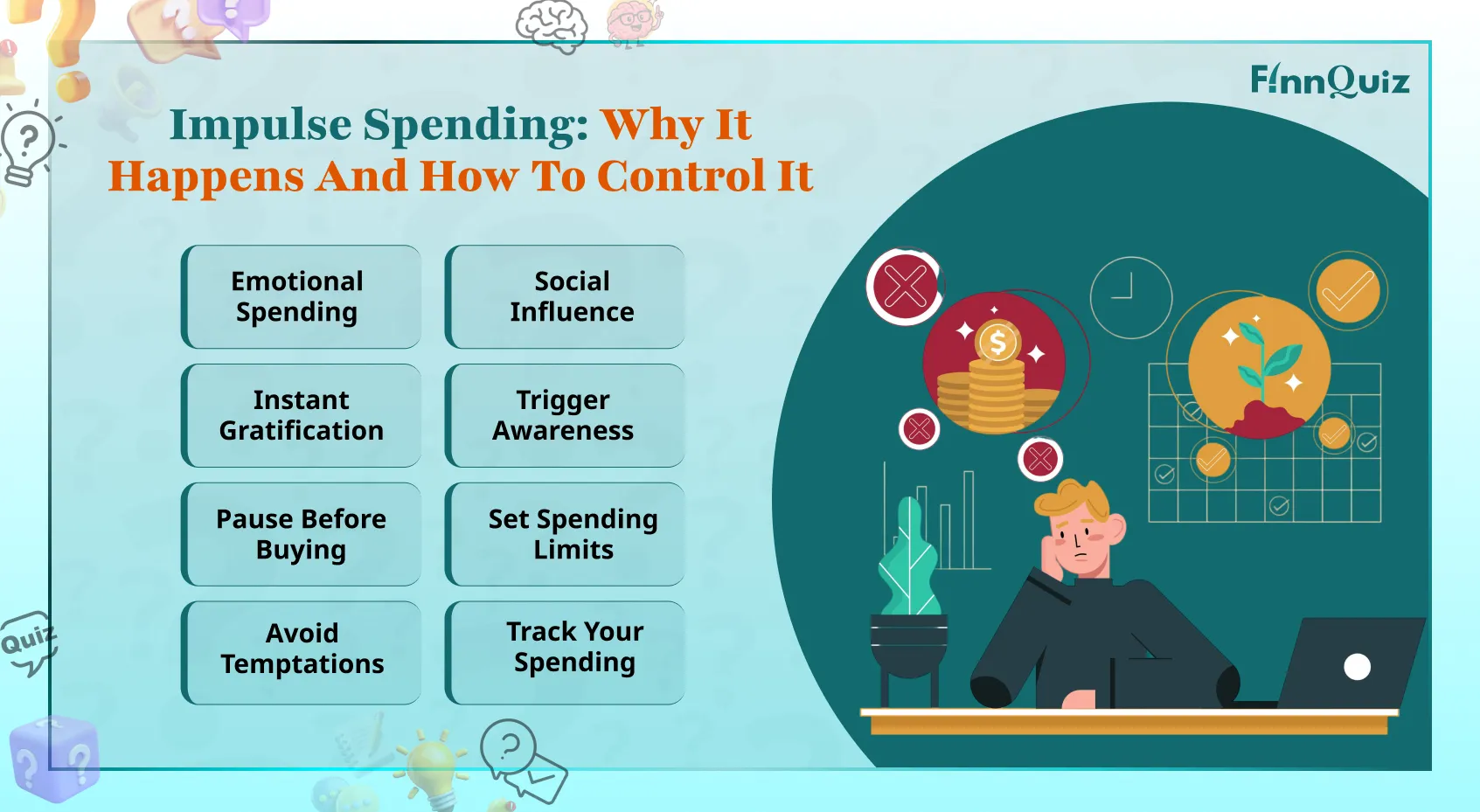
Impulse spending is not a character flaw—it is a predictable human behavior shaped by emotions, marketing, and habit. The good news is that once you understand why it happens, you can take practical steps to control it. You do not need superhuman willpower; you need a few simple systems and a clearer understanding of your own triggers. This guide explains the psychology behind impulse buying and gives you a step-by-step plan to reduce it, so you can keep more of your money for the things that truly matter.
What Impulse Spending Really Is
Impulse spending is an unplanned purchase made without much thought about whether it fits your budget or goals. It is driven by a sudden urge, a sense of urgency ("I need this now"), or an emotional state like stress, boredom, or excitement. Unlike planned purchases, which are intentional and considered, impulse buys are reactive and often regretted shortly after. They can happen in a store, online, or even through a mobile app. The key is that they bypass your rational decision-making process.
Why Impulse Buying Costs You More Than You Think
A single impulse purchase might seem small, but those small purchases add up quickly. A $5 coffee every workday is $100 a month—$1,200 a year. A $30 impulse buy once a week is $1,560 annually. Over ten years, that same $30 weekly habit could cost you over $15,000 in lost savings, not counting what that money could have earned if invested. Impulse spending does not just cost you today; it costs you the future growth of that money. Every dollar spent on an impulse is a dollar that is not building your emergency fund, paying down debt, or growing in an investment account.
The Psychology Behind Impulse Spending
Impulse purchases can have different causes: convenience, emotion, social pressure, scarcity cues, habits, or simply a poor spending plan. Treat the possibilities below as prompts for observing your own behavior, not as a psychological diagnosis.
- Emotional triggers: Stress, boredom, sadness, or even excitement can trigger a purchase. Shopping provides a temporary mood boost—a hit of dopamine—that feels rewarding. This is why many people shop when they are feeling low.
- Present bias: The human brain is wired to prefer immediate rewards over future ones. The pleasure of owning something today feels much more vivid than the abstract value of saving for a future goal.
- Environmental cues: Retailers and websites are designed to encourage impulse buys. Limited-time offers, "only 3 left" warnings, strategic product placement, and personalized recommendations all create urgency and desire.
- Social pressure: Social media and advertising create FOMO (fear of missing out). Seeing others with new products or experiences can trigger the desire to keep up.
- Mental accounting: People often treat money differently depending on where it came from. A tax refund or a bonus feels like "extra" money and is spent more freely, even though it has the same value as your regular paycheck.
Step-by-Step: How to Take Control
These steps work together to reduce impulse spending. You do not have to do all of them at once—pick one or two to start.
- Step 1: Identify your triggers. For one week, note every impulse purchase and what you were feeling at the time—stressed, bored, tired, or excited? Also note the environment: were you browsing online, walking through a store, or seeing an ad? This data reveals your personal patterns.
- Step 2: Test a waiting period. Choose a threshold and delay that fit the purchase—for example, one day for a small discretionary item and longer for a costly one. Record whether the delay changes the decision. A waiting period creates space; it does not guarantee that an urge will disappear.
- Step 3: Change your environment. Remove shopping apps from your phone, unsubscribe from promotional emails, and unfollow social media accounts that trigger spending. These small changes reduce the number of temptations you encounter.
- Step 4: Use cash for discretionary spending. Withdraw a fixed amount each week for things like dining out, entertainment, and shopping. When the cash is gone, the spending stops. The physical act of handing over cash feels more "real" than swiping a card.
- Step 5: Shop with a list. Whether it is groceries or a trip to the mall, always go with a written list. Do not deviate from it. Stores are designed to encourage unplanned purchases; a list is your defense.
- Step 6: Track your spending. Review your transactions weekly. This creates awareness. When you see the total amount spent on impulse buys, it is often a powerful motivator to cut back.
- Step 7: Find non-spending rewards. If you impulse buy when stressed or bored, find alternative activities that provide a similar reward—going for a walk, calling a friend, reading, or practicing a hobby. This replaces the spending habit with a healthier one.
Detailed Numerical Examples
Example 1: The Daily Coffee
Suppose you buy a $5 coffee on your way to work every day. Over a month (20 workdays), that is $100. Over a year, that is $1,200. If you instead made coffee at home for $0.50, you would save $4.50 per day, or $90 per month, and $1,080 per year. Over ten years, with a conservative 5% annual return if invested, that $1,080 yearly saving could grow to over $13,500. This is the power of small changes.
Example 2: The 24-Hour Rule in Action
You see a pair of shoes online for $80. You feel a strong urge to buy them. Instead, you use the 24-hour rule. The next day, you realize the urge has faded—you do not really need them, and they are not as special as they seemed. You skip the purchase. If you do this just twice a month, you save $160 monthly—$1,920 annually. Over five years, that is nearly $10,000 in savings and potential growth.
Worked Spending-Trigger Example
In this hypothetical example, a shopper notices that unplanned online purchases occur mainly during late-night browsing. A seven-day log records $120 of purchases that were not on the original list. The example identifies a pattern without diagnosing its psychological cause.
She implements three changes: (1) She removes shopping apps from her phone. (2) She unsubscribes from promotional emails. (3) She uses the 24-hour rule for any non-essential purchase over $30. In the first month, she resists 80% of her usual impulse urges, saving approximately $160. She redirects that $160 to her emergency fund. After six months, she has saved nearly $1,000 just by reducing impulse buys. She feels more in control and less anxious about her spending.
Comparison Table: Impulse Control Strategies
| Strategy | Effort Level | Effectiveness | Best For |
|---|---|---|---|
| 24-hour rule | Low | High | Online and in-store purchases |
| Remove shopping apps | Low (one-time) | High | Online impulse buyers |
| Cash-only for fun spending | Medium (weekly) | High | In-store and everyday spending |
| Unsubscribe from emails | Low (one-time) | Medium | Online temptation reduction |
| Shop with a list | Low | High | Grocery and planned shopping |
| Weekly spending review | Medium | High | Building overall awareness |
| Find non-spending rewards | Medium | Medium to High | Emotional spending |
Common Mistakes and Their Consequences
- Being too restrictive: Cutting out all discretionary spending leads to deprivation and eventually a spending binge. Allow yourself some "fun money" within your budget.
- Not identifying triggers: If you do not understand why you impulse buy, you will struggle to stop. Track your emotions and environments to find your patterns.
- Ignoring small leaks: A $5 purchase here and $10 there seems insignificant, but it adds up. Small leaks sink big ships.
- Giving up after one slip: One impulse buy does not erase your progress. Acknowledge it, learn from it, and continue your efforts. Perfection is not required.
- Relying only on willpower: Willpower is limited. Use systems and environmental changes that reduce temptation—that is far more effective.
Exceptions and Limitations
Not every unplanned purchase is an impulse buy. Sometimes you genuinely need something you had not anticipated—like a replacement for a broken essential item. The goal is not to eliminate all unplanned spending but to reduce the frequency of purchases driven by emotion, habit, or marketing rather than genuine need. Also, some people may find that cash-only systems do not work well if they primarily shop online; for them, removing saved payment methods or using a waiting period is more effective.
Practical Checklist
- Have you tracked your spending for at least a week to identify patterns?
- Have you identified your emotional and environmental triggers for impulse buying?
- Do you have a waiting period rule (e.g., 24 hours) for non-essential purchases?
- Have you removed shopping apps and unsubscribed from promotional emails?
- Do you use cash or a set weekly limit for discretionary spending?
- Do you review your spending weekly to stay aware?
- Have you found alternative activities to replace emotional shopping?
- Are you allowing yourself some guilt-free fun money within your budget?
Run a Seven-Day Spending-Trigger Log
This week: Track every expense and note the circumstances around any impulse purchases. Next week: Identify your top two triggers and choose one strategy to address each (e.g., remove shopping apps and implement the 24-hour rule). By the end of the first month: Review your spending and total up how much you saved by resisting impulses. Celebrate that amount—maybe treat yourself to a small reward that does not break the budget. After three months: These new habits should feel more natural. Consider automating the money you saved into a savings account or using it to pay down debt.